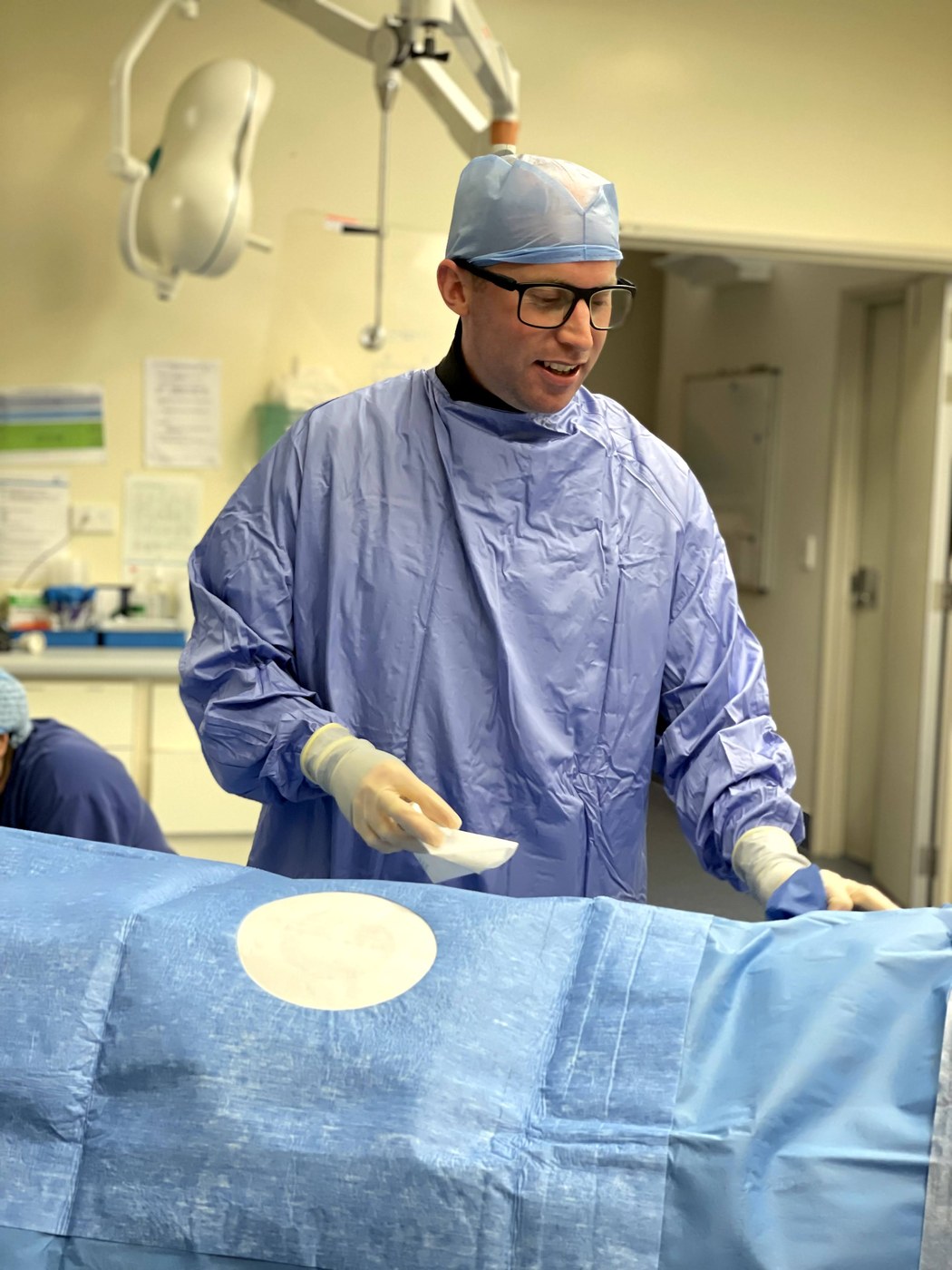
Interventional radiology (IR) uses real-time medical imaging, X-ray, ultrasound and CT, to guide tiny instruments through the blood vessels or directly to the problem area. Most procedures are carried out through an opening in the skin just a few millimetres wide.
Many conditions traditionally treated with open surgery can now be treated this way: blocking the blood supply that feeds fibroids or an enlarged prostate, closing faulty veins, or destroying tumours with targeted energy or radiation.
- No large incisions, usually no stitches at all
- Most procedures use sedation with image-guided regional analgesia, often no general anaesthetic at all
- Advanced procedures across the whole body, essentially everything from the neck down
- Shorter hospital stays, often home the same day
- Organs are preserved, and surgery remains an option later if needed